
Is Brave Browser Safe? What to Know Before You Switch
Is Brave browser safe for passwords, banking and everyday browsing? Learn how it handles your data, what it protects and what to check before switching.

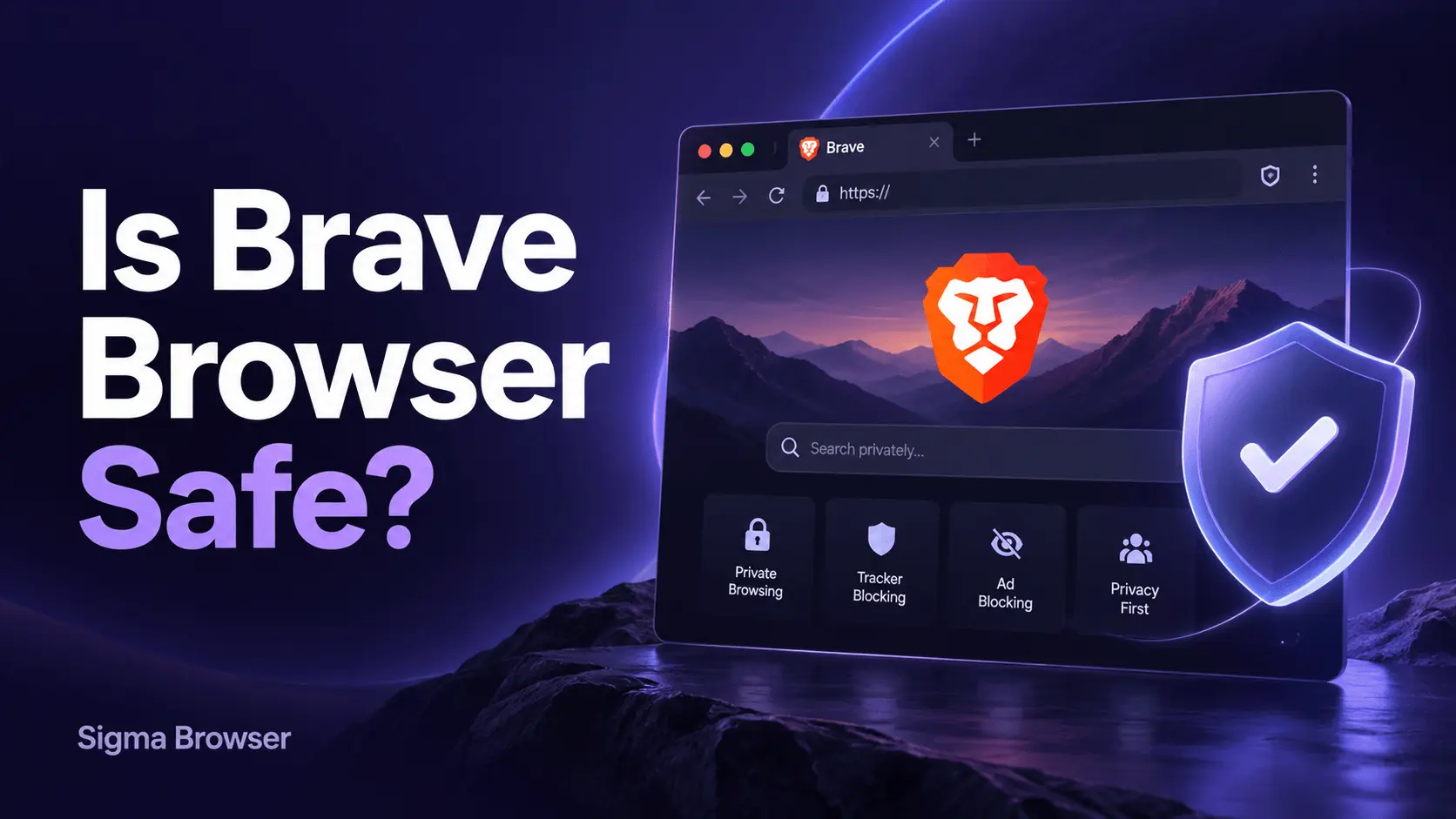
If you're checking whether Brave is safe before switching, the short answer is yes for everyday browsing, provided you download it from Brave's official site or your device's app store and keep it updated. Brave blocks most ads and trackers by default and runs on the same underlying engine as Chrome, so it gets the same security patches Google ships for that engine.
No browser makes every website you visit trustworthy though. Brave can stop a tracker or flag a known malicious site, but it can't tell you whether a shop you've never heard of will ship your order, or whether a login page is the real one. Safety here splits into two halves: what the browser does automatically and what you still have to check yourself.
What Is Brave and Why Do People Use It?
Brave is a free web browser built on Chromium, the same open-source project behind Google Chrome, Microsoft Edge and several other browsers. That shared foundation is why switching feels familiar: extensions, bookmarks and most websites work the same way they do in Chrome.
The main reason people choose Brave is Brave Shields, a built-in system that blocks ads and trackers on most sites automatically, without installing anything extra. Pages tend to load faster and with less clutter as a result, since fewer scripts and ad networks get to run in the first place. Brave also ships privacy defaults that Chrome doesn't turn on by default, like tracker blocking and reduced connections to Google's own services.
For someone coming from Chrome, the adjustment is mostly cosmetic. The bigger question is what happens to your data once you're using it, which is where trust gets tested.
Can You Trust Brave With Your Personal Information?
Does Brave Track You or Sell Your Data?
What Brave the company collects about you: according to its own privacy policy, Brave does not collect or retain your browsing history and states directly that it does not buy, sell or share personal data about consumers. A handful of individual features do process limited technical data to function. Safe Browsing, for instance, checks visited sites against a list of known unsafe URLs; on desktop, Brave routes this check through its own servers specifically so your IP address isn't exposed to Google in the process.
What the websites you visit can learn is a separate matter entirely, and it doesn't go away just because Shields is on. If you log into your bank, your email or a shopping account, that site knows who's logged in, the same as it would in any browser. Brave's tracker blocking reduces how much of your activity gets shared with outside advertising networks; it doesn't stop a site from recognizing its own logged-in user.
One important caveat: no serious source claims Brave collects zero data at all, or that everything stays on your device under every circumstance. Optional features like Sync or Brave Rewards do process specific pieces of information to work, and Brave's own documentation lists exactly what and for how long.
Why Is Brave Free? What's the Catch?
Brave makes money mainly through its own advertising system, Brave Ads, which is opt-in and separate from the browser itself. According to Brave, these ads are matched to you locally, on your device, rather than by sending your browsing data to an ad server first.
Brave Rewards is a related, optional program: turn it on, see privacy-respecting ads and earn a token called BAT that can be sent to websites and creators you choose. You never have to touch cryptocurrency to use Brave. Rewards is off unless you turn it on, and declining it doesn't require anything from you.
Turning Rewards off, though, doesn't remove every ad Brave shows. Brave's own default new-tab-page background ads and Search-related ads are controlled through separate settings, not through the Rewards toggle alone.
Is Brave Safe for Passwords, Banking and Shopping?
Saving passwords in Brave: the built-in password manager stores credentials locally and can sync them across your devices if you enable Sync, which Brave encrypts so only your own devices hold the key. That protects passwords sitting in the browser. It doesn't help if someone gets into your device directly, or if you reuse that same password on a site that later gets breached.
Banking: here's the honest version. Brave doesn't do anything special for your bank login. It secures the connection the same way any modern Chromium browser does, and that's the extent of it. The actual security of your banking session comes from your bank's own site and your own credentials, not from which browser sits on top. The one Brave-specific wrinkle: tracker blocking can occasionally interfere with a bank's own fraud-detection scripts. If a banking site starts behaving oddly, try lowering Shields for that one domain before assuming something's broken.
Shopping: same story. The padlock icon in the address bar means the connection is encrypted, nothing more. It says nothing about whether the store itself is legitimate. Brave can warn you if a site is already flagged as fraudulent, but a brand-new scam storefront usually isn't on that list yet.
None of this is really about Brave. Unique passwords, two-factor authentication where it's offered and a moment spent checking a web address before entering payment details protect you regardless of which browser you're using. Brave isn't doing that work for you, and no browser is.
What Does Brave Protect You From—and What Can Still Happen?
Brave tends to handle the automated, technical side of tracking and known threats well. The human side, judging whether a login or a message is real, still falls on you:
Brave also offers a Tor-connected private window for a further layer of IP masking, useful for specific situations. Brave's own support documentation is direct about the limits of that mode. It does not implement most of the protections found in the dedicated Tor Browser, and someone with access to your device, or a determined observer of your network, may still be able to tell what you're doing. Brave itself recommends the standalone Tor Browser for anyone whose personal safety depends on staying anonymous.
What Are the Downsides of Using Brave?
Some sites behave differently in Brave. Because Shields blocks certain scripts by default, an occasional site, especially one relying on ad-tech-style verification or embedded widgets, may not load correctly. The fix is usually specific to that one site: click the Shields icon and lower protection just for that domain, rather than turning tracker blocking off everywhere.
Extra features you may never touch. Brave Wallet, Brave Talk and Brave Rewards are built in, but none of them are required to use the browser as a normal, ad-blocking Chromium browser. If they're not useful to you, they simply sit unused; nothing about ignoring them makes the base browsing experience less safe.
Sync has no recovery option. If you ever lose every device signed into your Sync chain, there's no way for Brave to restore that data, since only your own devices held the decryption key in the first place. Back up your sync code somewhere safe if you rely on Sync across devices.
Is Brave Safer Than Chrome?
For default privacy behavior, yes, in specific, checkable ways. Brave blocks ads and cross-site trackers out of the box; Chrome requires extensions or manual settings changes to get close to the same result. Brave also routes certain background checks, like Safe Browsing, in ways designed to expose less to Google than Chrome's own defaults do.
For baseline security, both browsers sit on Chromium and receive the underlying engine's security fixes. Neither one is meaningfully more or less "secure" against, say, a zero-day vulnerability in the rendering engine itself; that part of the foundation is shared.
Where Chrome still has an edge is deep integration with Google's own ecosystem, Workspace, Drive and services that assume a Google-signed-in Chrome session. If your work depends on that integration, Brave will feel like a deliberate trade-off rather than a strict upgrade.
The honest summary: more private by default, not automatically "more secure" in every technical sense and the right call depends on which of those two words matters more for what you do online. For a deeper comparison, see our full breakdown of Brave vs. Chrome privacy.
Should You Switch to Brave?
If you mainly want fewer ads, less cross-site tracking and privacy defaults that work without configuration, Brave is a reasonable everyday choice, and the switch from Chrome is close to painless since most extensions and sites behave the same way.
If your workflow depends tightly on Google's own ecosystem, or a specific site or extension you rely on doesn't play well with tracker blocking, test that before committing. The fix is sometimes just a per-site setting, not a dealbreaker.
A short checklist once you've installed it:
- Download Brave only from brave.com or your device's official app store.
- Confirm you're on the latest version before relying on it daily.
- Bring over only the extensions you use, rather than everything at once.
- Open the handful of sites that matter most to you (banking, email, work tools) and confirm they behave normally.
- Review the New Tab and Rewards settings so you know what, if anything, is showing you ads.
Switching browsers changes what happens automatically in the background, not what you're responsible for on top of it. For more on what any browser can and can't do about who's watching your activity, see how websites track you.
One more option worth knowing about if you're comparing browsers anyway: Sigma Browser (our product) builds privacy tools and an AI assistant into the same browser, rather than treating them as separate things you bolt on afterward. It's a different focus than Brave's ad-and-tracker-first approach, not a strict upgrade, worth a look specifically if AI-assisted browsing is part of what you're after.
More articles

Download Sigma Browser
Questions & Answers
reach out to us on X at @Sigma_Browser
Get Sigma on Android


