
AI Tattoo Generators Can Design Your Next Tattoo. But Should You Trust Them?
AI tattoo generators can turn an idea into a design in seconds, but a good-looking image is not always tattoo-ready. Learn how AI tattoo design works, what to watch for, and when a tattoo artist should take over.

Getting a tattoo usually starts long before the first appointment. People spend hours collecting references, comparing styles, looking through artists’ portfolios, and trying to turn a vague idea into something a tattoo artist can actually work with.
AI tattoo generators are changing the first part of that process. Instead of searching through hundreds of images, users can describe an idea in a few sentences and receive a custom tattoo concept within seconds.
A person can specify the style, placement, symbolism, level of detail, and mood they want. The result can look surprisingly close to a finished design.
But tattoos are different from ordinary AI images. A picture that looks impressive on a screen does not automatically become a good tattoo. Small details may disappear, compositions may not work on the body, and some designs may be difficult for an artist to recreate.
The question is not only whether AI can create a tattoo. It is whether the design is actually useful before it reaches human skin.
How AI Tattoo Generators Create Designs
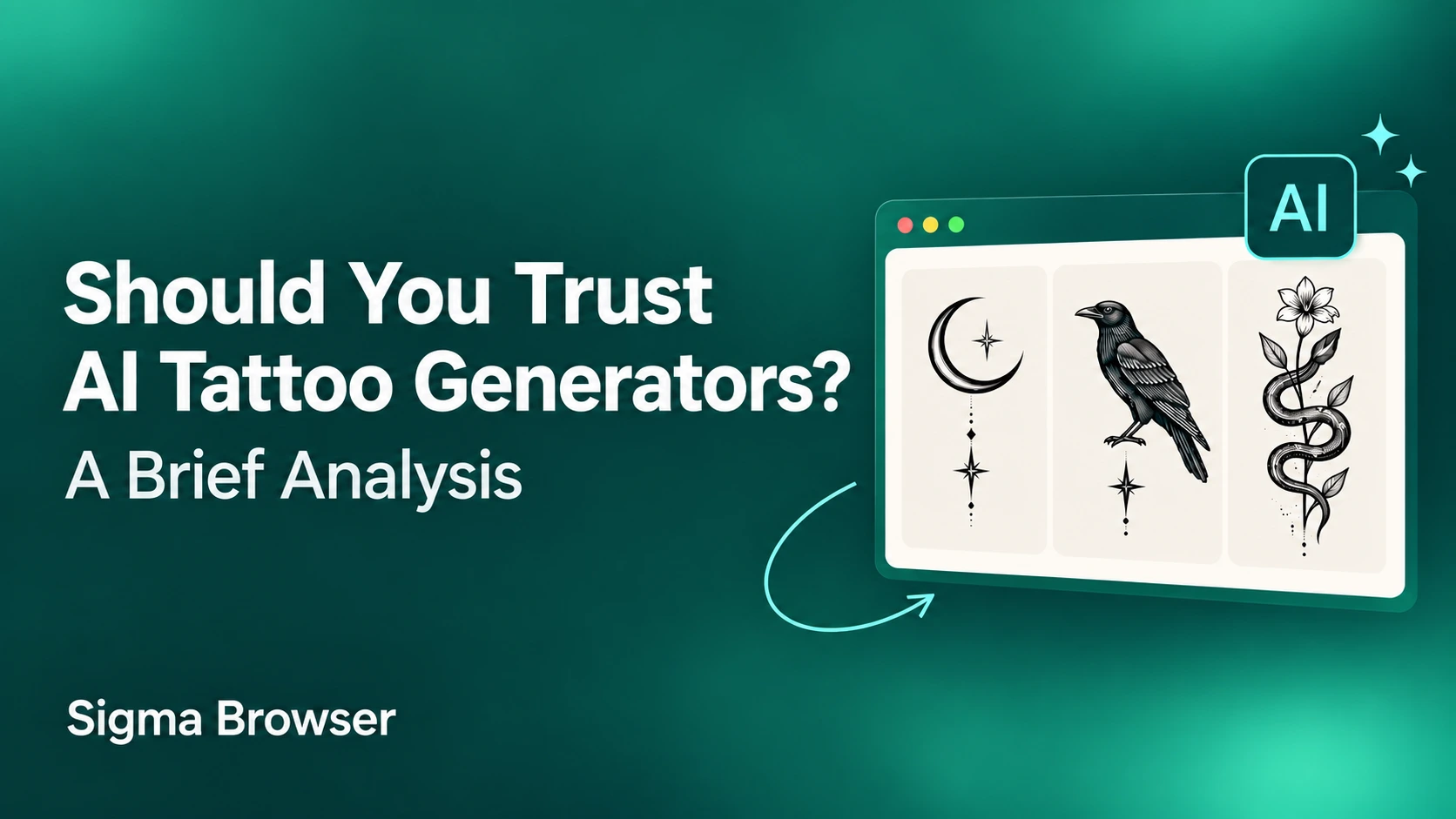
The quality of the result depends heavily on how clearly the prompt describes the intended tattoo. The model needs more than the subject itself. Style, placement, level of detail, color, and composition all affect what it generates. A request for a raven tattoo, for example, can produce anything from a realistic illustration to a minimal line drawing unless those choices are specified in advance.
Even a detailed prompt does not guarantee a tattoo-ready design. The generator still has to translate those instructions into a composition that makes sense visually and, ideally, could later be adapted to real skin.
We Used the Same Tattoo Prompts to Compare AI Results
To see how different AI tattoo generators interpret the same idea, we use three prompts with increasing levels of difficulty. The first tests whether the model can keep a design simple, the second focuses on realism and shading, and the third asks it to combine several elements into one composition.
Using the same prompts makes the differences easier to see because every generator starts with exactly the same instructions.
Where AI Tattoo Generators Usually Perform Well
AI tattoo generators are most useful when the idea is still vague and the person wants to explore several visual directions before choosing one.
A broad concept can quickly be translated into very different styles. The same subject might work as a dark medieval piece, a minimal nature design, a Japanese-inspired composition, or blackwork. Seeing those variations side by side makes it easier to understand which direction actually feels right.
Speed is the main advantage. Searching manually for references can take hours, especially when the person is still deciding between styles. AI can produce several interpretations in seconds and make that early exploration much faster.
Generated images can also make conversations with a tattoo artist more concrete. Instead of trying to explain an idea from memory, the client can bring a visual reference and discuss the composition, placement, level of detail, and elements that should change.
For that reason, AI works particularly well during the brainstorming stage, before the final design has been decided.
Why an AI Tattoo Design May Not Work in Real Life
The biggest mistake is assuming that a good-looking AI image is automatically a good tattoo.
Skin is not a flat canvas. A design has to work with body shape, movement, aging, and the limits of tattoo equipment.
Some common problems include:
Too many small details
AI generators often add impressive textures and tiny elements. On a screen, these details can look great. On skin, they may blur together over time.
Poor understanding of placement
A design that looks balanced as a square image may not fit naturally on an arm, leg, shoulder, or chest.
Impossible effects
AI can create lighting, textures, and transitions that are difficult or impossible to reproduce with tattoo techniques.
Lack of personalization
A tattoo usually has personal meaning behind it. AI can generate a visual concept, but it does not understand the story behind the design unless the person provides that context.
Can You Bring an AI Tattoo Design to a Tattoo Artist?
Yes. An AI-generated tattoo can be useful as a reference, but it should not be treated as a finished stencil that has to be copied exactly.
Tattoo artists routinely adapt reference images before putting them on skin. They may simplify small details, change proportions, adjust the composition for a specific body area, or redraw large parts of the concept so the design remains readable after healing and aging.
An AI image can still make the preparation much easier because it gives the artist a clear visual direction. It can show the preferred style, overall composition, important elements, and the kind of result the client has in mind without relying on a long verbal explanation.
The final version benefits from the artist's experience with line weight, spacing, contrast, placement, and the way different areas of the body affect a tattoo over time. AI can provide the starting point, while the artist turns that reference into a design that can actually work on skin.
Creating a Tattoo Is Only One Part of the Process
Finding the right artist can mean moving between studio websites, individual portfolios, Instagram pages, reviews, location information, and examples of similar work. Once several artists and styles are being compared at the same time, the research can become almost as time-consuming as developing the tattoo idea itself.
This is where an AI browser can be useful. Instead of repeatedly switching between pages and manually collecting the same information, a browser agent can help read websites, compare sources, summarize relevant details, and keep the research organized.
This is where AI browsers can help with the research stage.
Instead of manually switching between every page, a browser agent can help collect information, summarize websites, compare sources, and organize references.
Sigma Browser’s AI Agent is built around this type of workflow. It can navigate websites, read pages, interact with browser content, and help complete multi-step research tasks while keeping the process inside the browser.
For someone planning a tattoo, this could mean researching artists, comparing portfolios, or preparing a clearer brief before contacting a studio.
AI Tattoo Generators Are Better at Inspiration Than Replacement
AI has made tattoo design more accessible. Someone without drawing skills can now turn an idea into a visual concept within seconds.
But a tattoo is not only an image. It is a permanent design that has to work with the human body.
AI has made tattoo design more accessible because someone without drawing skills can now turn an idea into a visual concept within seconds. The most useful role for these tools is early in the creative process, when the person is still exploring styles, compositions, and references.
Once a direction is clear, the generated image can become part of the conversation with a tattoo artist. The artist can then adjust the composition, remove details that will not age well, change proportions, and adapt the design to the body.
That division of work makes more sense than treating the generated image as a finished tattoo stencil. AI helps develop the visual direction, while the tattoo artist determines how that idea should actually work on skin.
Final Takeaway
AI tattoo generators are becoming a useful tool for exploring tattoo ideas, but they are not a replacement for tattoo artists.
They can create concepts, suggest styles, and help people communicate what they want. The best results usually come when AI is used as a starting point rather than a finished product.
The same applies to the research process around a tattoo. Finding the right artist, comparing styles, and collecting references can take just as much time as creating the first design.
AI tools are changing how people move from an idea to a finished tattoo. The creative decision, however, still belongs to the person wearing it and the artist bringing it to life.
More articles

Download Sigma Browser
Questions & Answers
reach out to us on X at @Sigma_Browser
Get Sigma on Android


