
Free AI Story Generators Tested: Characters, Stories, and Limits
We tested free AI story generators for character creation, complete stories, and consistency. Compare results, limits, and prompts you can try yourself.

We sent the same mystery-writing prompts to four free AI story generators, Sigma AI Chat, Squibler, Type, and Perchance, and kept every unedited response. Some tools gave us finished stories. Others gave us an outline, a short preview, or an opening to build on ourselves, and that difference matters more than any single quality score.
This compares only what came back for free, tested on September 15, 2026. "Character generator" here means a written character profile for fiction, not a portrait or image. What follows is a real comparison, actual excerpts from each tool's output, the exact prompts we used, and a process you can repeat yourself, using Sigma to build a character and a story from scratch.
Free AI Story Generators at a Glance
Based only on what we could confirm: if you want a finished short story plus a coherent follow-up scene, Sigma gave us the most complete free results. If you want a fast premise and opening to evaluate before committing elsewhere, Type's free preview was the most usable starting point. If you want a long, scene-by-scene draft and don't mind editing for consistency, Squibler produced by far the most material once signed in. If you'd rather build a story paragraph by paragraph yourself, Perchance's workflow is built for that, though the specific field we tested didn't return a finished story or a character profile.
How We Tested the Free Versions
We tested the free web versions of four tools on September 15, 2026: Sigma AI Chat, Squibler, Type, and Perchance. All four were tested through their public web interfaces, using the same English prompts and a grounded mystery genre, with no magic or supernatural elements.
Every tool received the same approved character sheet for the story test, not the profile it had just generated a moment earlier, so a strong profile from one tool couldn't get credit for a story it didn't produce. Sigma's follow-up scene was requested inside the same chat as its first story, with no context manually re-pasted.
Word counts were calculated using a fixed method, so the numbers in this article are comparable to each other, though not necessarily to what each tool's own interface reports.
This is a small sample, one or two runs per tool, not enough for a statistical ranking. Sigma and Squibler both distinguish guest access from access after a free sign-in, and those states aren't directly comparable to each other. No paid plans, trials, or card details were used anywhere in this test.
Free AI Story Generators Compared
Sigma AI Chat
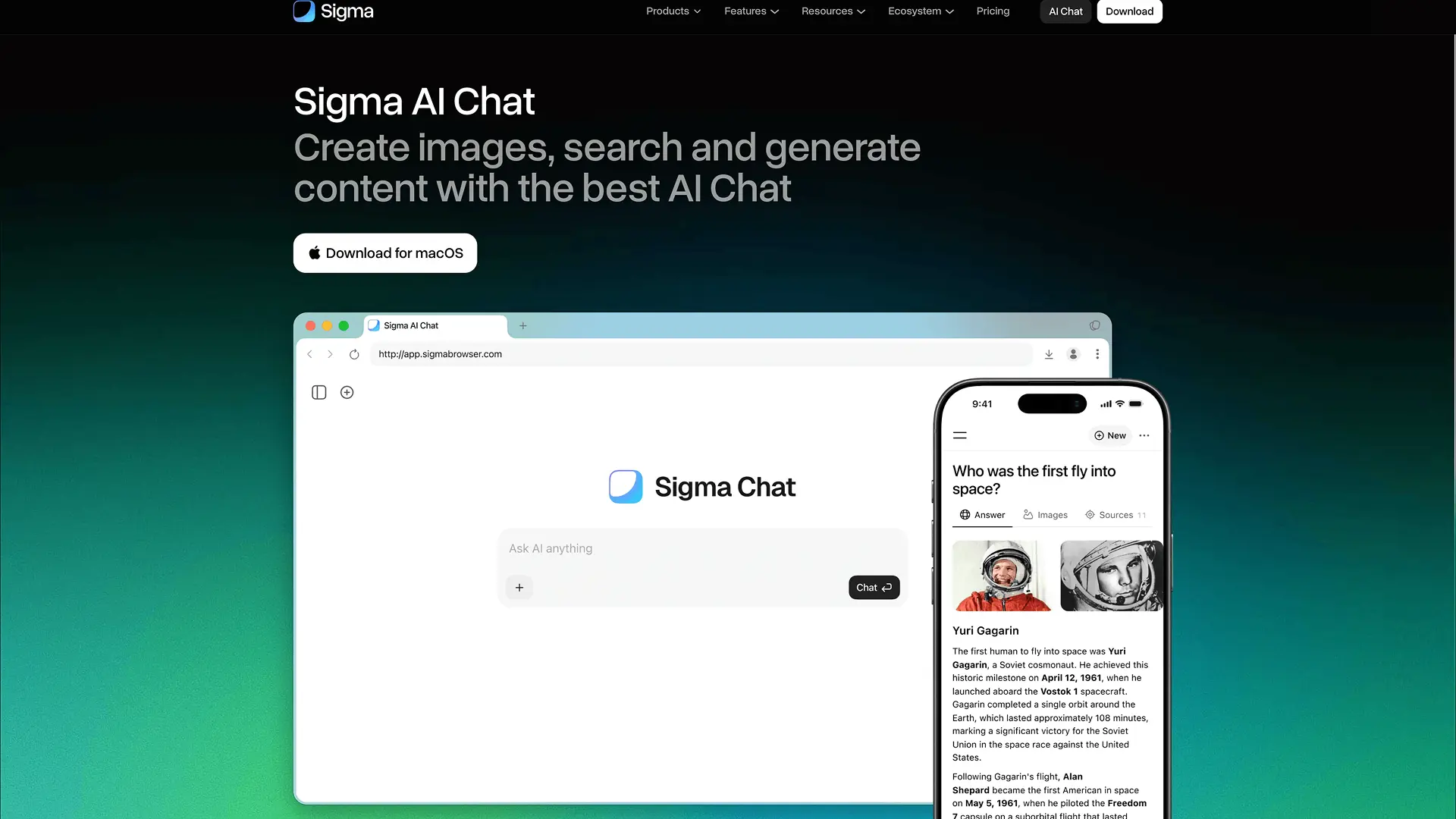
We tested Sigma AI Chat's web version at app.sigmabrowser.com, not Sigma Browser's built-in chat. The model wasn't disclosed anywhere in the interface, and no separate genre, length, or model controls were shown, every result came from typing prompts into the same general-purpose chat.
Character profile (321 words). Sigma built a protagonist with a stated goal, investigating the disappearance of a set of watches entrusted to her, and a flaw described through action rather than a label: "she can ignore warnings and advice." The fixed facts were repeated consistently at the end of the profile. One gap: the stated motivation to "prove her independence" was never connected back to feeling overshadowed by her brother, which the prompt had asked for.
First story (867 words). Sigma returned a complete story with a title, not an outline. Two clues were planted, but the actual identification of the culprit leaned on an unexplained leap: "Eli carefully cleaned it and matched it to a local handyman who had recently been fired from the museum for theft." How Eli made that match isn't shown. The story ran over the requested 650–850 word range and included one factual slip, referring to Mara as one of "the brothers."
Follow-up scene (376 words). Requested in the same conversation, with no context re-added by hand. The scene correctly used a boat to cross water, since the character can't swim, and referenced a specific detail from the first story, the engine room. It also introduced an unplanted detail ("three weeks ago") and an unrequested title.
Correction: partial. We asked Sigma to revise one specific passage rather than rewrite the story. It replaced the flagged fingerprint detail with a new one: "only one person had recently borrowed tools from both the museum and the ferry dock." That's a genuine partial fix, not a complete one, since this new detail wasn't planted anywhere earlier in the story either.
Second story, independent run (732 words). Started in a new chat with the same story prompt, no reference to the first run. The character's flaw did more visible work driving the plot this time: "That decision cost her two hours" ties Mara's silence directly to a cost. The same late-appearing-suspect issue from the first run was still present.
Best for, based on this test: getting a complete short story and a coherent follow-up scene for free, without switching tools. Main limitation: the culprit identification in both runs still needs a human check for whether the planted clues genuinely support the solution given.
Squibler
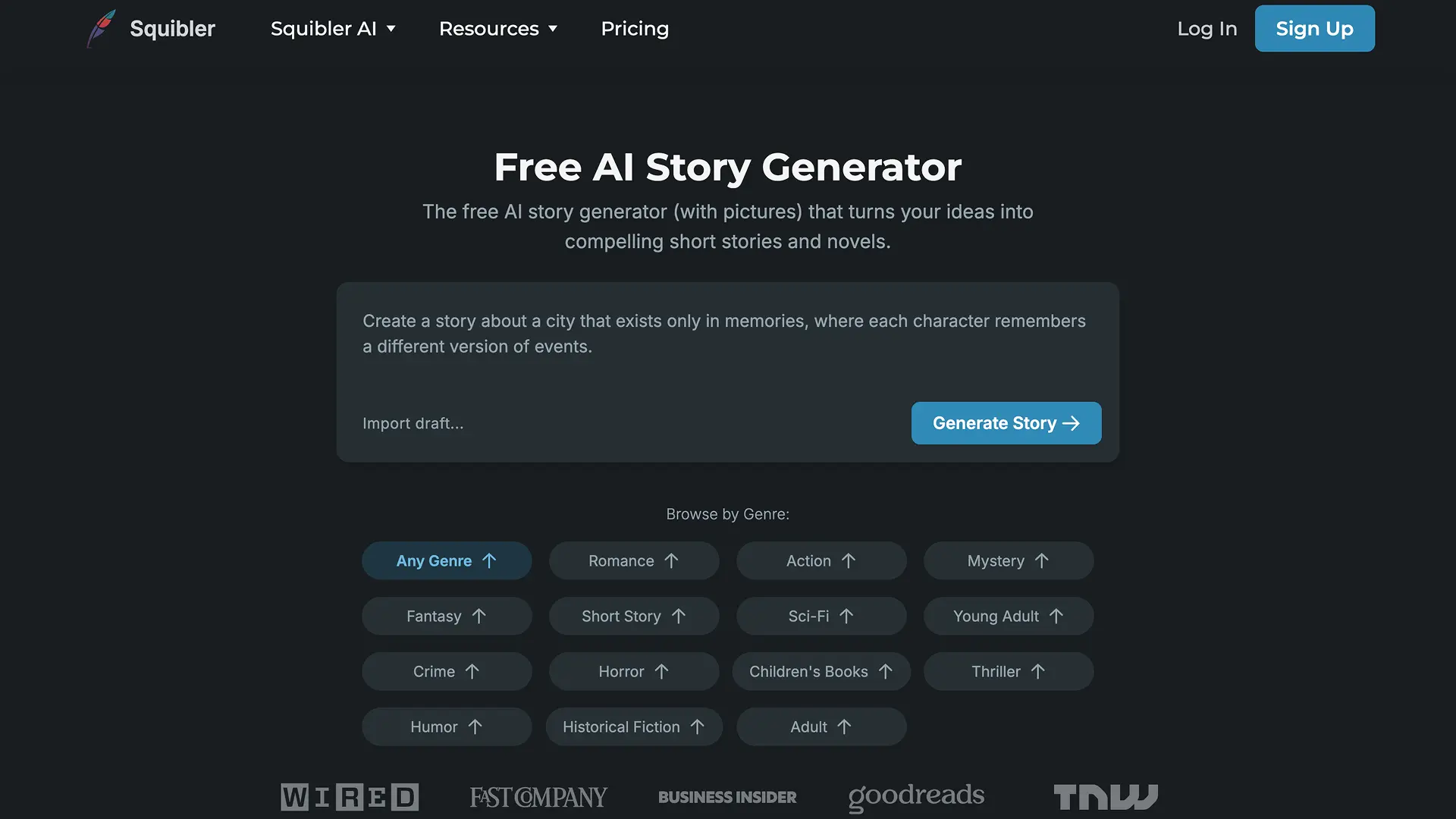
Squibler's Character Generator and Story Generator are separate tools, and we tested both.
Character profile. The guest result bundled a 142-word profile inside a longer outline, plus an unrequested 891-word opening scene, despite the prompt explicitly saying "Do not write the story yet." The profile itself included a genuine moral stake: the investigation "clears her brother but ruins the town's only ferry business."
Story, guest access (724 words). Without signing in, Squibler's preview ends mid-complication rather than resolving anything: "I watched, silent, as they led Eli away in handcuffs." That's a real limit of the free preview, not a failed story, since a preview isn't built to deliver a full arc.
Story, after free sign-in (45,584 words). Signing in for free unlocked the editor, and the same prompt auto-expanded into a 20-scene manuscript, dramatically past the requested 650–850 words. The manuscript introduced consistency problems across scenes: the museum curator is named Curator Halloway in one scene and Mr. Eldrin in another, and narration shifts from first person to third person partway through. A recovered chronometer also appears to be found a second time without explanation.
Continuation and correction: not tested. Squibler's free AI credit balance was exhausted after the manuscript, and the interface showed a negative credit balance afterward, which we're not treating as evidence of any money owed, just a depleted free allotment.
Best for, based on this test: a long, scene-by-scene first draft you're prepared to edit heavily for continuity. Main limitation: the free tier's automatic scene expansion ran far past a short story and introduced its own tracking errors along the way.
Type
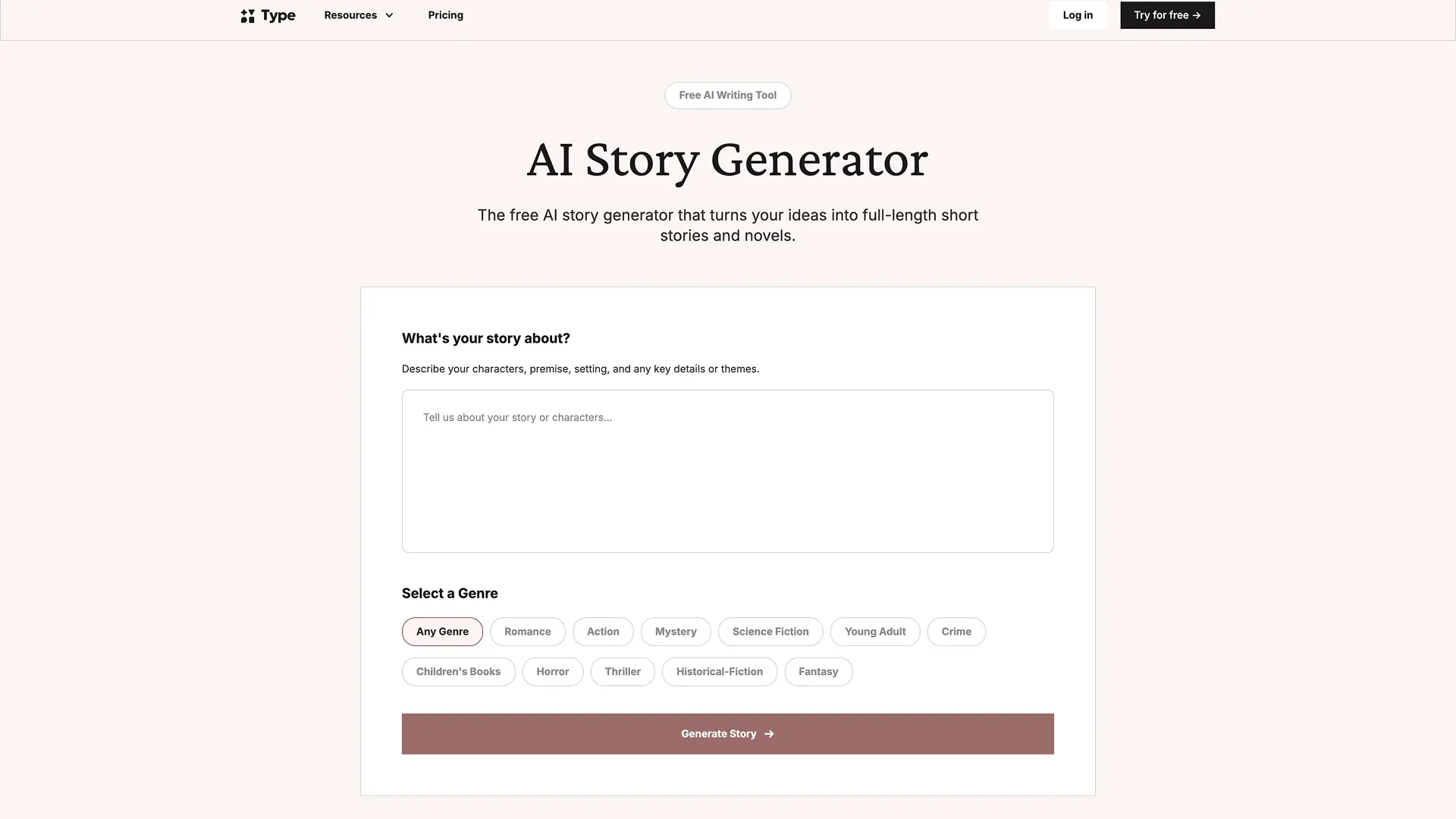
Type's public web Story Generator needed no account for what we tested.
Character attempt: not assessable. Both of our attempts returned the same interface error, "Something went wrong. Please try again." We can't say from this whether Type's character tool works, only that it failed twice for us on this date.
Story: outline plus a 192-word preview. Type's "Generate Story" produced an outline, and a separate "Generate This Story" button produced a short preview, not a finished story. The preview sets up a clear stake: "After that, I take him across to the county precinct," giving an understandable deadline. The outline had one plotting problem worth flagging on its own terms: it has Mara hiding from Eli information about his own bank withdrawal, a continuity issue in the plan itself, not in prose that was never written.
Continuation and correction: not tested. There's no complete free story from Type to continue or correct, and our submissions on this workflow were already used.
Best for, based on this test: a fast premise and opening to evaluate before committing to a longer draft elsewhere. Main limitation: no complete story came out of the free workflow we tested, and character generation failed both times we tried it.
Perchance
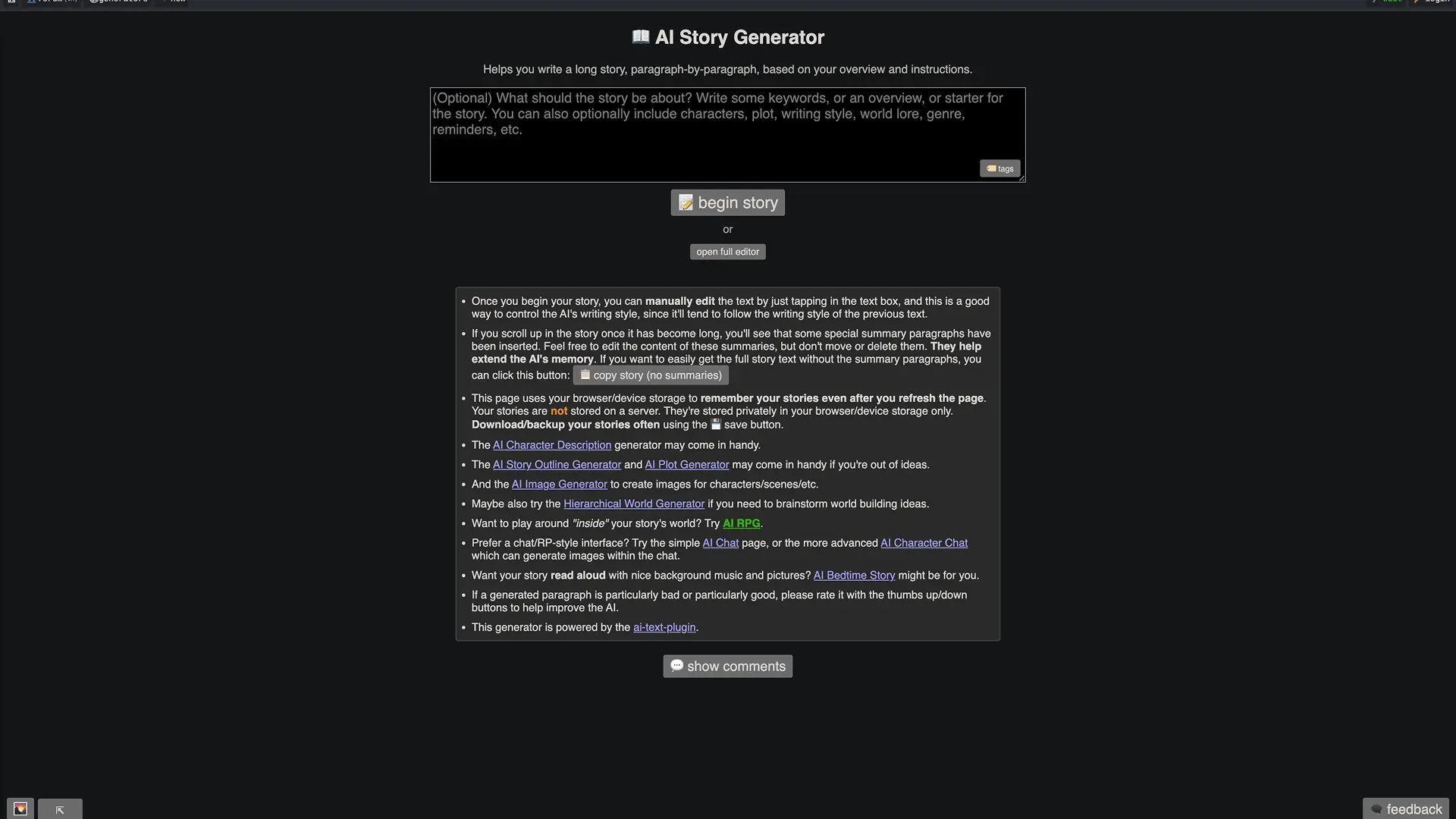
Perchance's main Story Generator, not the separate Character Description page it links to, was the workflow we tested. That separate page wasn't tested, so we can't say whether Perchance is unable to produce character profiles in general, only that this specific field didn't when given a character prompt.
Character-style prompt: 150 words of story, not a profile. Rather than a character sheet, the field returned a 150-word narrative opening. A goal came through, finishing an order by Friday for new tools, but the flaw, backstory, and relationship tension the prompt asked for didn't.
Story (326 words) at the 5-paragraph setting. The response was a story opening only, no title, no resolution, matching the length category we selected rather than a complete arc.
Correction. We asked for a revision, and Perchance added 145 new words to the end of the story rather than fixing the original passage. The original text wasn't replaced or corrected; new material was appended after it.
Continuation and repeat: not tested, since there was no completed story to continue, though Perchance's interface does support building a story paragraph by paragraph in general.
Best for, based on this test: building a story gradually, paragraph by paragraph, if that's the workflow you want. Main limitation: the main Story Generator field we tested didn't return a character profile or a finished short story on a single request.
What the Tests Showed About Characters and Story Consistency
A detailed profile doesn't guarantee the traits shape the plot. Example: the story test deliberately used one approved character sheet across all tools, not the profile each tool had just generated, so a strong profile couldn't get credit for a story it didn't drive. What genuinely shaped a plot came through most clearly in Sigma's second run: "That decision cost her two hours" ties the character's flaw directly to a consequence. What to check: whether the trait causes something real in the story, not just whether the profile mentions it.
Keeping a name consistent is different from keeping a fact straight. Example: Squibler's 20-scene manuscript kept the protagonist's name consistent throughout, but the museum curator's name changed partway through, Halloway to Eldrin, and a recovered object appears to be found a second time without explanation. What to check: specific plot facts across scenes, not only whether character names stay the same.
A constraint can hold in the main story and slip in a follow-up. Example: Sigma's follow-up scene correctly kept the character out of the water, using a boat, but introduced an unplanted timeframe ("three weeks ago") that wasn't established anywhere earlier. What to check: hard constraints again every time you extend a story, not just in the original.
A correction request can add a new gap instead of closing the original one. Example: Sigma's fix for a flagged detail introduced a different, equally unplanted detail; Perchance's correction didn't touch the flagged passage at all, appending new text instead. What to check: that a requested fix resolves the specific problem you flagged, not just that something in the text changed.
Try the Same Story Test Yourself
These four prompts aren't Sigma-specific, you can run the same steps in any prompt-based story generator that lets you write a full instruction. What follows is the exact workflow we tested in Sigma, with the real prompts, so you can repeat it with your own character.
Build a Character With a Goal, Flaw, and Backstory
Start with fixed facts the AI can't change, then ask it to build personality on top of them. A goal, a flaw that can cause a bad decision, and one relevant past event give a character something concrete to do in a plot, rather than just a description.
Sigma's result was 321 words and described the flaw as an action rather than a label: "she can ignore warnings and advice."
Define the Conflict and the Facts the AI Must Preserve
Every tool in this comparison received the same approved character sheet for the story test, not the profile it had just generated, so no single tool's profile could get credit for a story it didn't produce. You can apply the same approach with your own fixed facts: turn whichever profile you like into a short reference list the AI has to preserve no matter what happens in the plot.
Generate the Story
Sigma returned a complete, titled story at 867 words, over the requested range but a real ending, not a preview. Two clues were planted along the way, though the final identification of the culprit still leaned on a leap the story doesn't fully explain.
Check the Result and Revise a Specific Problem
Once you have a draft, check it against your own requirements line by line, not just for tone. The specific thing we flagged was the requirement "resolve the mystery through established evidence," since the story's solution depended on a jump in logic the text hadn't earned.
The result was a partial fix, worth being honest about. Sigma replaced the fingerprint detail with a different one: "only one person had recently borrowed tools from both the museum and the ferry dock." That's a real change, but the new detail wasn't planted earlier in the story either, so the underlying requirement still isn't fully satisfied. A targeted correction prompt narrows the problem; it doesn't guarantee it's solved on the first try.
Continue the Story Without Losing Important Details
We sent this in the same chat as the original story, without pasting any context back in manually. The 376-word result correctly kept Mara out of the water, "The rowboat cut smoothly across the calm harbor," and referenced the engine room from the earlier story specifically, not vaguely. It also added a detail that hadn't been established, a timeframe of "three weeks ago", which is worth checking for since it wasn't a contradiction so much as a new, unverified claim. For a deeper look at why long conversations lose track of earlier details like this, see how to prevent AI from forgetting your context.
Ready to try this with your own character? Open Sigma AI Chat and run the same four prompts with your own fixed facts in place of Mara's.
More articles


Download Sigma Browser
Questions & Answers
reach out to us on X at @Sigma_Browser
Get Sigma on Android


